
Learning to Receive God's Compassion
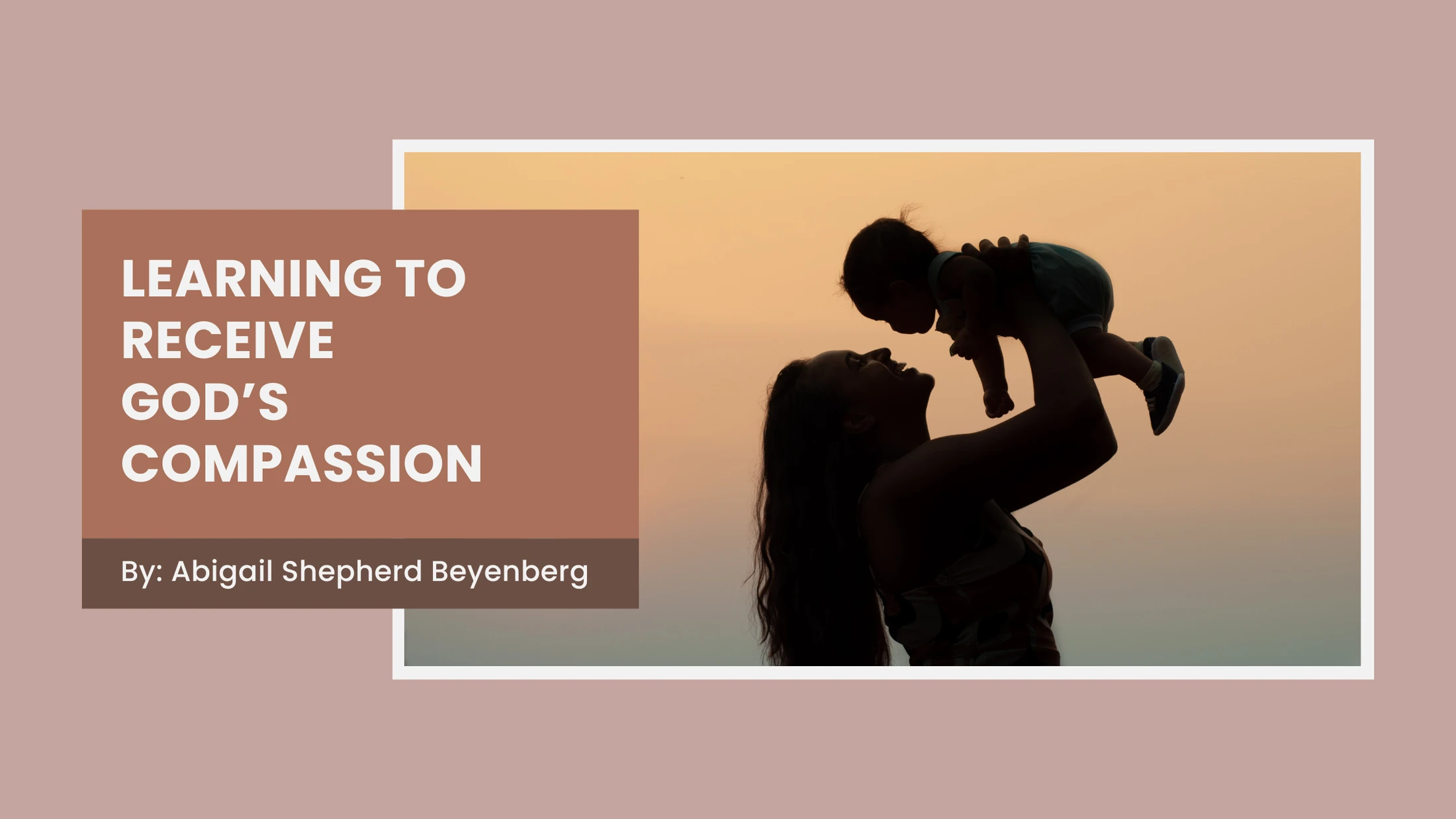
In honor of Mother’s Day, I wanted to share about a topic that all moms (and really all of us) could use a lesson in: Self-Compassion.
“As a father has compassion on his children, so the Lord has compassion on those who fear him; for he knows how we are formed, he remembers that we are dust.” Psalm 103:13-14
God is compassionate (1). Exodus 34:7-8, Deuteronomy 4:29-31, Micah 7:19, Isaiah 14:1, Isaiah 49:10, and Jeremiah 30:18 all reveal this to be true about God. Psalm 103 is a hymn of praise to the compassionate and merciful God. Interesting, the Hebrew word for compassion is related to the Hebrew word for womb. This is because compassion is centered in a person’s core and invites one to imagine a mother’s tenderness toward her vulnerable children. This is how God feels toward us. But God doesn’t just feel, God acts compassionately. God hears our cries for help, rescues us from despair, delivers us from sin, welcomes us into family, and offers us new life through mercy. God revealed this most fully through Christ Jesus, who was deeply moved with compassion and passionately poured out mercy upon all through His saving work. God is compassionate, indeed.
Although many Christians might know that God is compassionate, we sometimes have trouble experiencing God as compassionate. Whether due to critical caregivers, self-hate, unattainable expectations, or a focus on perfectionism, it is difficult to receive compassion from God when our earthly experiences have shown us otherwise. As a Christian and a psychologist, I’m often looking at ways in which contemporary psychology and my identity as a Christian fit together. I do believe that all truth is God’s truth and that the practice of self-compassion is a tool that can help the Christian who wants to experience more of God’s compassionate care by creating a posture of receptivity.
What is Self-Compassion?
According to the lead researcher in this area, Dr. Kristin Neff (2), self-compassion is treating yourself with the same kindness, care, and understanding you would offer a good friend.
Self-compassion has three core components:
1. Self-Kindness – Being warm and understanding toward yourself rather than harshly critical.
2. Common Humanity – Recognizing that suffering and imperfection are part of the shared human experience.
3. Mindfulness – Noticing your thoughts and feelings without exaggerating or suppressing them.
The psychological benefits of self-compassion are widely supported by research. The practice of this skill reduces anxiety and depression, increases emotional resilience, improves motivation, strengthens relationships, decreases burnout, and supports healthier coping strategies. It is a skill that I end up sharing and teaching nearly every one of my patients – regardless of faith background.
So why is it that Christians have such a tough time with this concept? Maybe they feel unworthy? Maybe they feel it is too self-focused?
But hear this, how are we supposed to show compassion to others when we don’t even know how to receive it for ourselves?
This is the piece that reminds me of moms. Moms are notorious for serving others and putting their needs last. There is a reason they have to remind us to put our own oxygen mask on first (before the kids) every single time we get on a plane. So think about it - in an emergency, are you really going to put your own oxygen mask on first? Why do moms need this reminder over and over again? Instinctively, we protect our young - we don’t necessarily think through the proper order of operations - we act as if it is a reflex. But what’s left at the end of the day? Are we running out of oxygen? Are our bodies so neglected that we look in the mirror at someone who is utterly unrecognizable? I do not believe this is how God intended it. If we want our kids to act compassionately towards themselves and others, we need to model it. It isn’t enough to just show compassion towards them, if we want them to show compassion towards themselves - they need to see us care and practice compassion too.
How to Model Self-Compassion
One of the simplest ways to self-correct and model self-compassion is by becoming more aware of how you talk to yourself when things don’t go well. You forget your daughter’s Jiu-Jitsu uniform and don’t realize it until you’re pulling up one minute before class starts. You burn dinner. You show up to work late because the baby had a blowout right as you were walking out the door. What do you say? Is it internally or out loud?
These are the things I poke at in the therapy room - making the automatic things that come out of our mouths or run on autopilot in our heads, and bringing them more into our conscious awareness. I’ve heard it all, from “I’m such an idiot” to “What is wrong with you?” There has to be another way to manage these moments that models compassion.
Because here’s the thing - what if it was your best friend? What if your best friend, whose child is also taking Jiu-Jitsu, shows up and says, “Oh my gosh, I forgot my daughter’s belt!” Are you going to respond with “Wow, you’re such an idiot!” Well, if you are a good friend, I sure hope not! No, you’d probably respond with compassion, “Oh, I’ve done that too! It happens! Don’t worry, I’m sure they have an extra you can borrow.” It is so much easier to show that friend compassion, even though if we were in the same moment, we could have a totally different reaction.
Try Something Different
Next time you run up against a hassle or a misstep. I want you to stop, close your eyes, and think about what you would say to a friend if a friend were in that same situation, and I want you to allow that compassion to boomerang back on yourself. This is what God has for us - you’re loved, enough, and human. We all make mistakes, and if we can learn to offer compassion towards ourselves just like we would towards a friend, we will be able to model Christ’s love better, not only for our kids, but also in a way that grows peace and compassionate care within ourselves.
Source 1: https://bibleproject.com/videos/character-of-god-compassion/
Source 2: “The Mindful Self-Compassion workbook” by Kristen Neff & Christopher Germer
BIO: Abigail Shepherd, PhD, is a Licensed Clinical Psychologist with specialized training in whole person care and health psychology. She owns her own business where she works with individual clients, often addressing the unique intersection of mental, physical, and spiritual health. She also holds a Master’s in Theology from Fuller Theological Seminary and is passionate about adapting psychological health resources for people of faith.
For more information about Dr. Shepherd or her practice, please visit: drabigailshepherd.com